2- Partial Snow Load Cases for Purlins
Continuous purlin—typically Z-purlins lapped over rafters—instead of non-continuous (simple-span) purlins mainly because continuity gives higher efficiency, as stated in Partial Snow Loads (Just for Purlins). However, In the case of continuous purlins, partial snow loading must be considered [1]:
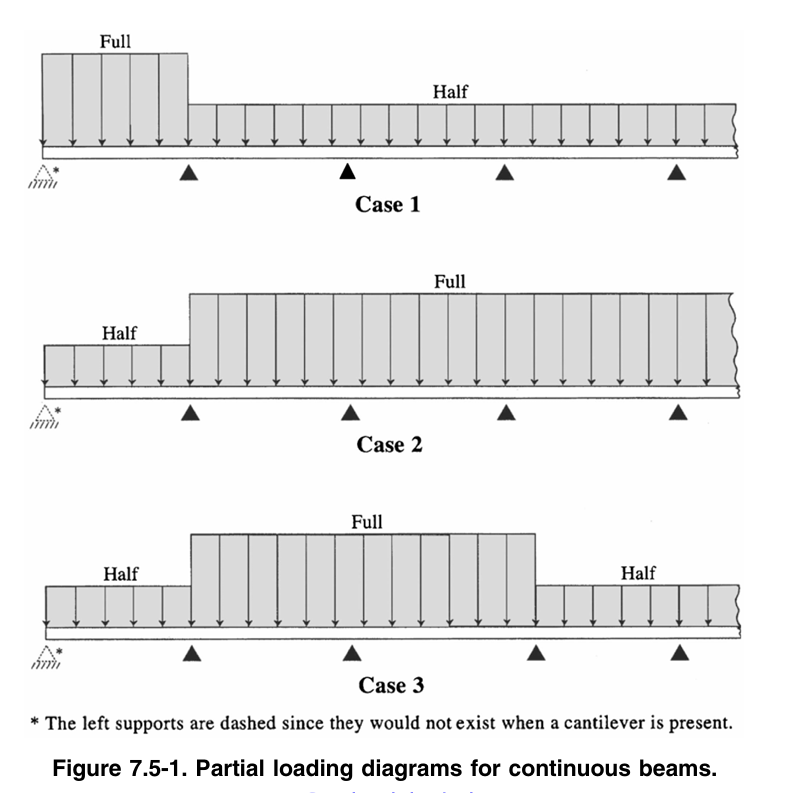
Continuous beam systems shall be investigated for the effects of the following three partial-loading cases:
Case 1: Full balanced snow load on either exterior span, and half the balanced snow load on all other spans.
Case 2: Half the balanced snow load on either exterior span, and full balanced snow load on all other spans.
Case 3: All possible combinations with full balanced snow load on any two adjacent spans, and half the balanced snow load on all other spans. For this case, there are (n−1) possible combinations, where n is the number of spans in the continuous beam system.
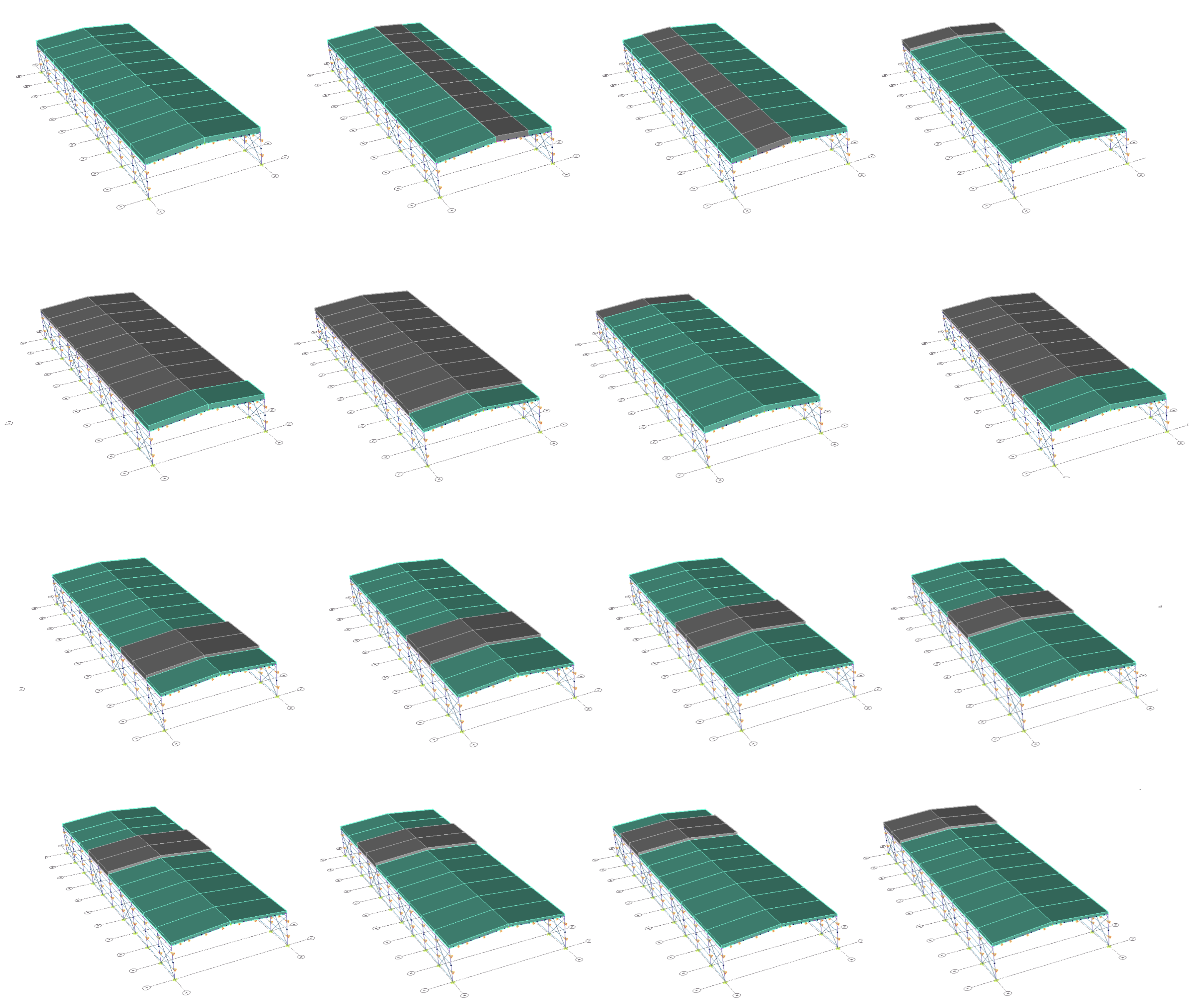
This means that, for the purlin design of a single-span PEMB with 10 bays, a total of 16 load cases must be considered, as follows:
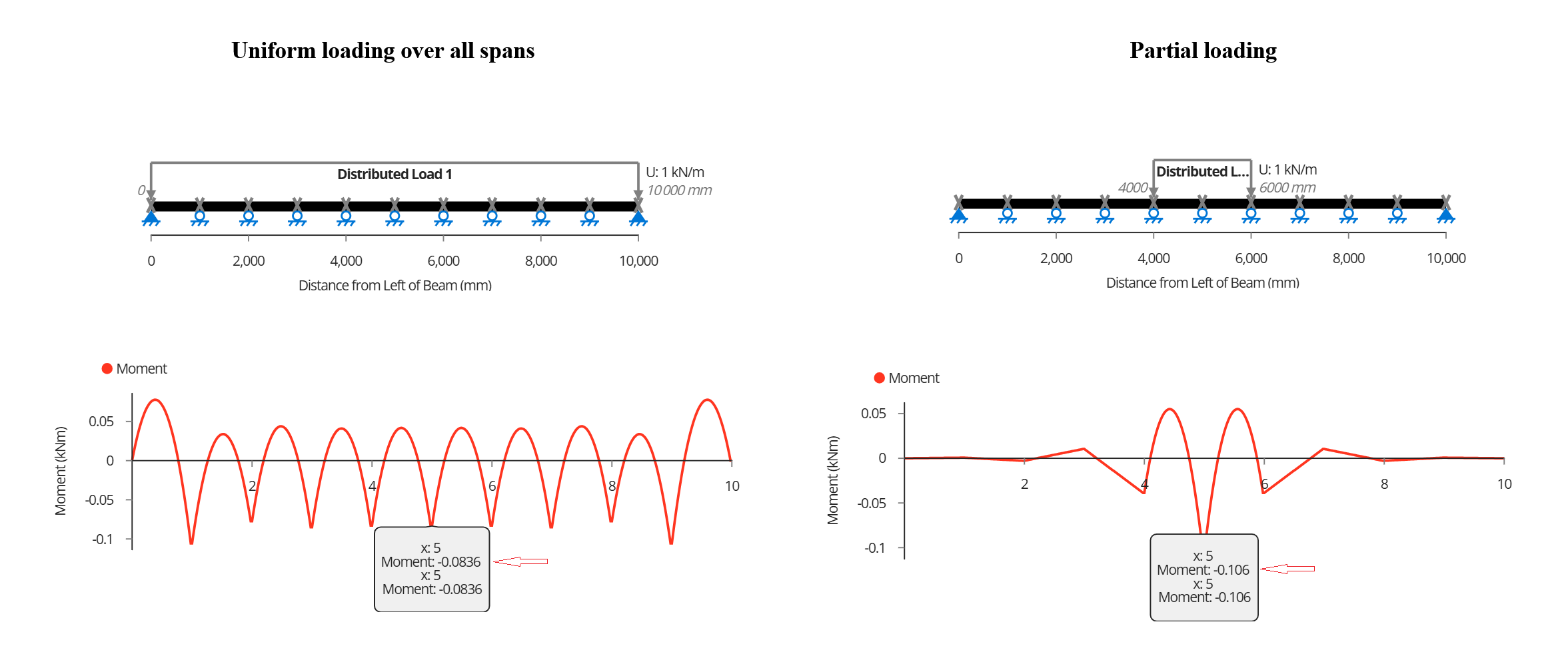
However, structural designers generally do not take the partial-loading cases into account, even though these cases may produce more critical effects than uniform loading over all spans. This significantly underestimate purlin demand, leading to substantially lighter purlins that are neither safe nor code-compliant.
References:
[1] American Society of Civil Engineers. "Minimum design loads and associated criteria for buildings and other structures." American Society of Civil Engineers, 2022.