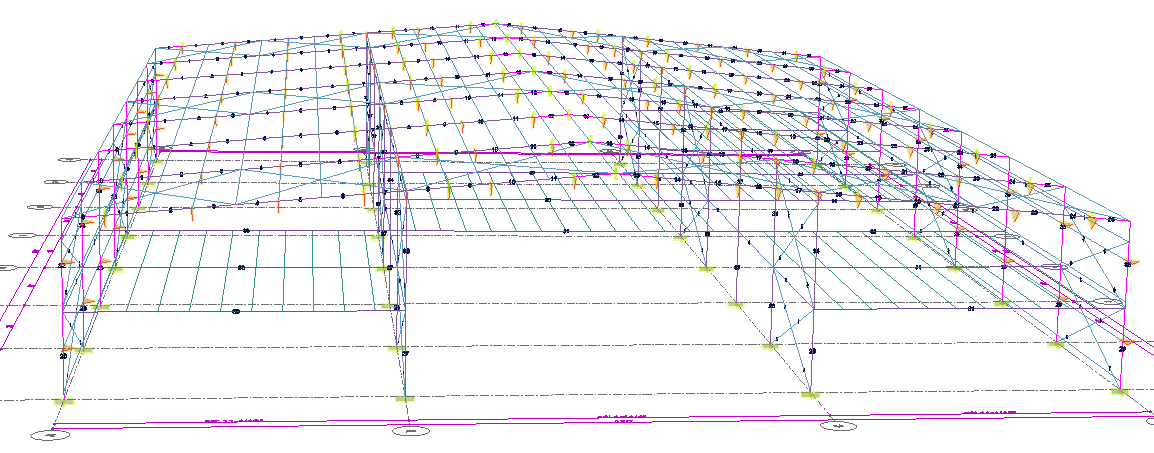
Mezzanines
A mezzanine is an intermediate floor—typically a partial second level—installed within the clear height of a single-storey steel building. In pre-engineered metal buildings (PEMBs), mezzanines are commonly used to create office areas, maintenance platforms, equipment rooms, control stations, or high-density storage without expanding the building footprint. In practice, a mezzanine is not just “extra floor area”; it becomes a structural subsystem that interacts with the primary frame, secondary framing, and foundations.
Mezzanines are important because they directly increase the functional value per square meter of the facility. Many industrial buildings start as “open warehouse space” and later require production lines, utilities, HVAC platforms, packaging areas, or administrative spaces. A mezzanine offers a cost-effective way to meet these evolving needs while maintaining the benefits of a single-storey PEMB—fast construction, optimized steel usage, and flexible layouts. In procurement terms, the mezzanine often turns a standard warehouse into a more complete, higher-value facility.
Structurally, considering mezzanines in design are also critical because they introduce significant gravity loads and serviceability demands (deflection, vibration sensitivity, local load concentrations, and realistic load paths). They can change column reactions, increase foundation demands, and alter the behavior of bracing and overall building stability—especially when the mezzanine is connected to frames, includes openings, supports equipment, or carries high live loads. If a mezzanine is treated as a “detail” rather than a designed system, projects can face redesign cycles, unexpected weight increases, constructability issues, or costly field modifications.
MkaPEB enables you to model and analyze mezzanines as part of the full building system, not as an afterthought. You can represent mezzanine framing and its loads within the same analysis/design workflow used for the main PEMB structure, so member forces, reactions, and building response reflect the real load path. This allows you to present clear model views and result screenshots (geometry, member assignments, loading, reactions, demand/capacity outputs) that demonstrate to owners and reviewers that the mezzanine has been treated as a fully engineered component—supporting safer, more reliable, and more cost-effective projects.