Stability Design (Purlins)
According to AISC 360-22 [1], lateral bracing shall be attached at or near the beam compression flange. In a PEMB, both bottom and top flanges of a rafter can act as the compression flanges. However, there are either point bracing (by purlins) or panel bracing (by sheetings) on the top flange, which typically provide the required bracing for the top flanges. However, some parts of the rafters, positive moments occur, meaning the bottom flanges act as the compression flanges. In these regions, the bottom flanges must be properly restrained to prevent lateral-torsional buckling.
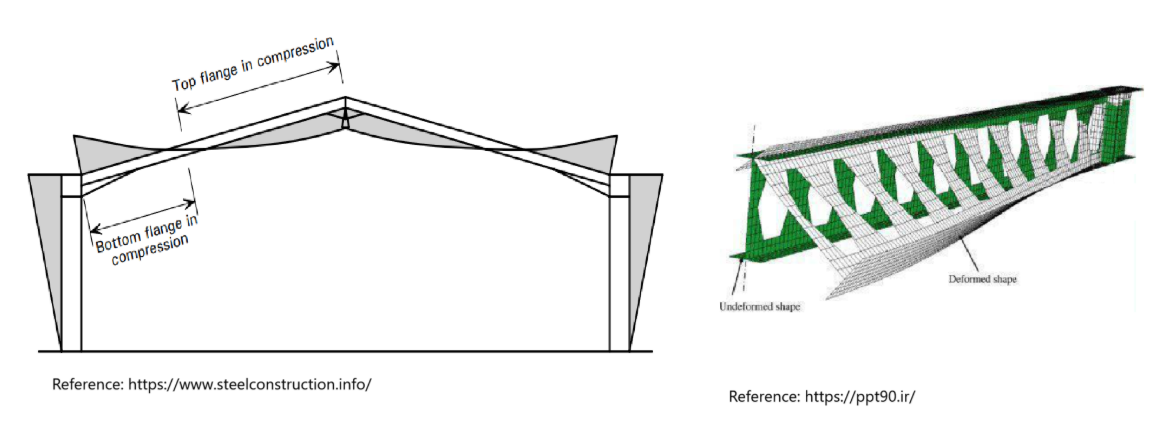
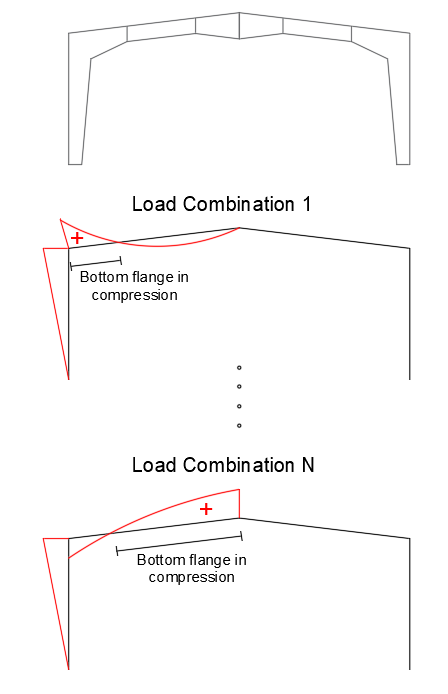
It should be noted that the length of the bottom flange acting as the compression flange varies depending on the load combination. Therefore, the unbraced length shall be determined separately for each load combination. Based on the section properties, moment values, and the corresponding unbraced lengths, the governing (most critical) case among all load combinations is then used for design.
There are several methods commonly used to reduce the unbraced length, such as Torsional Bracing Systems, Tie Beams, Flange Bracing [2,3].
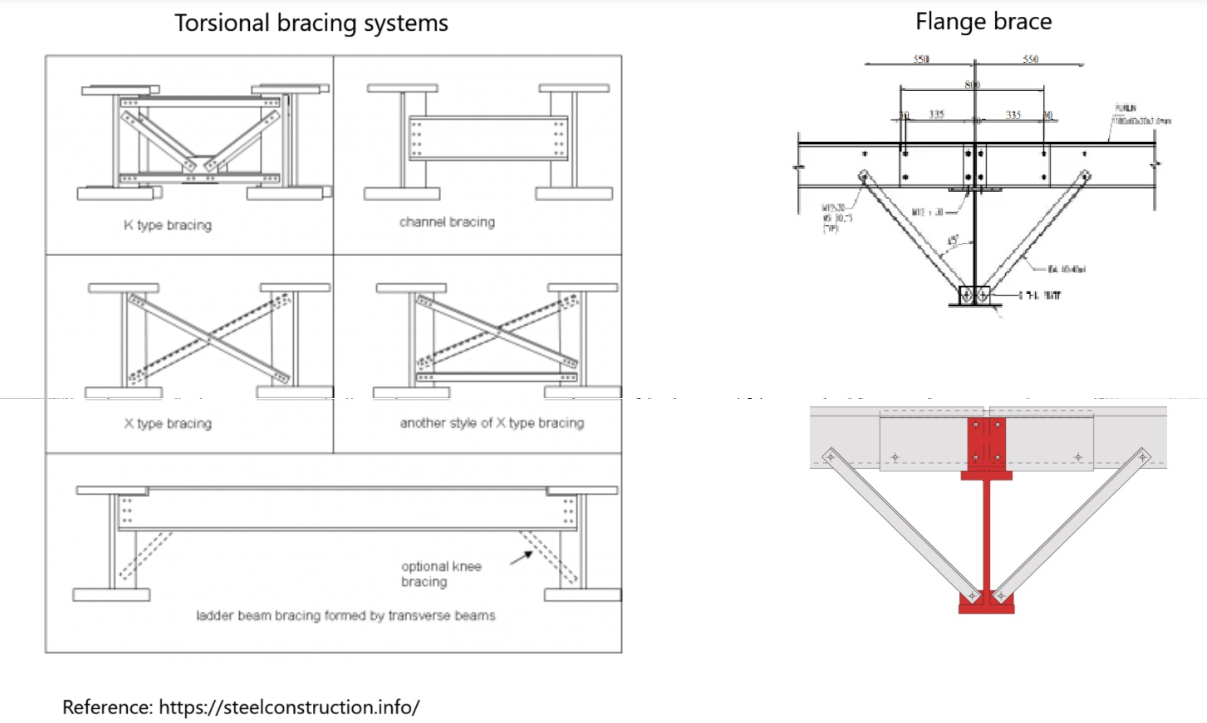
Flange Bracing stands out as one of the most economical and widely adopted solutions for preventing LTB in the roof of PEMBs and Portal Frames. Therefore, MkaPEB provides the ability for users to use flange (Fly) allows users to benefit from lighter, more efficient structures without sacrificing performance or reliability.
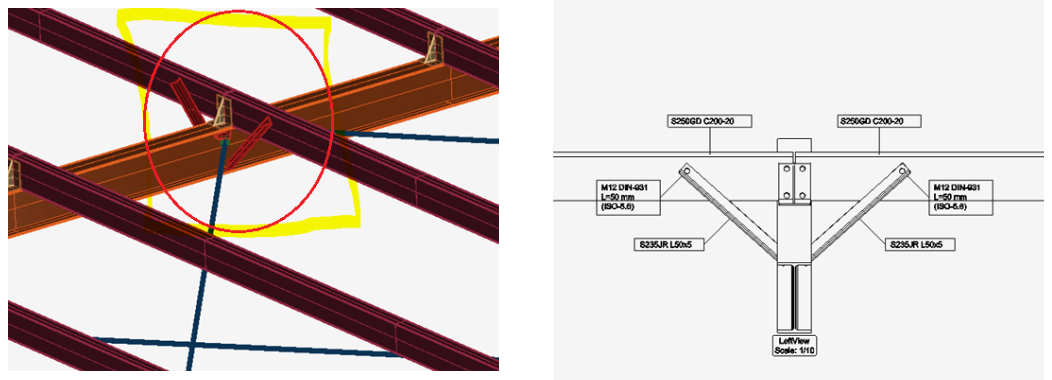
It should be note that while design the Fly bracing, MkaPEB accurately calculates the maximum moment value among all combinations and design the fly bracing accordingly. The design of fly bracing is based on guidance on the stability design requirements for bracing systems, Learning Portal of Applications of AISC Appendix 6 Bracing Concepts [N11A].
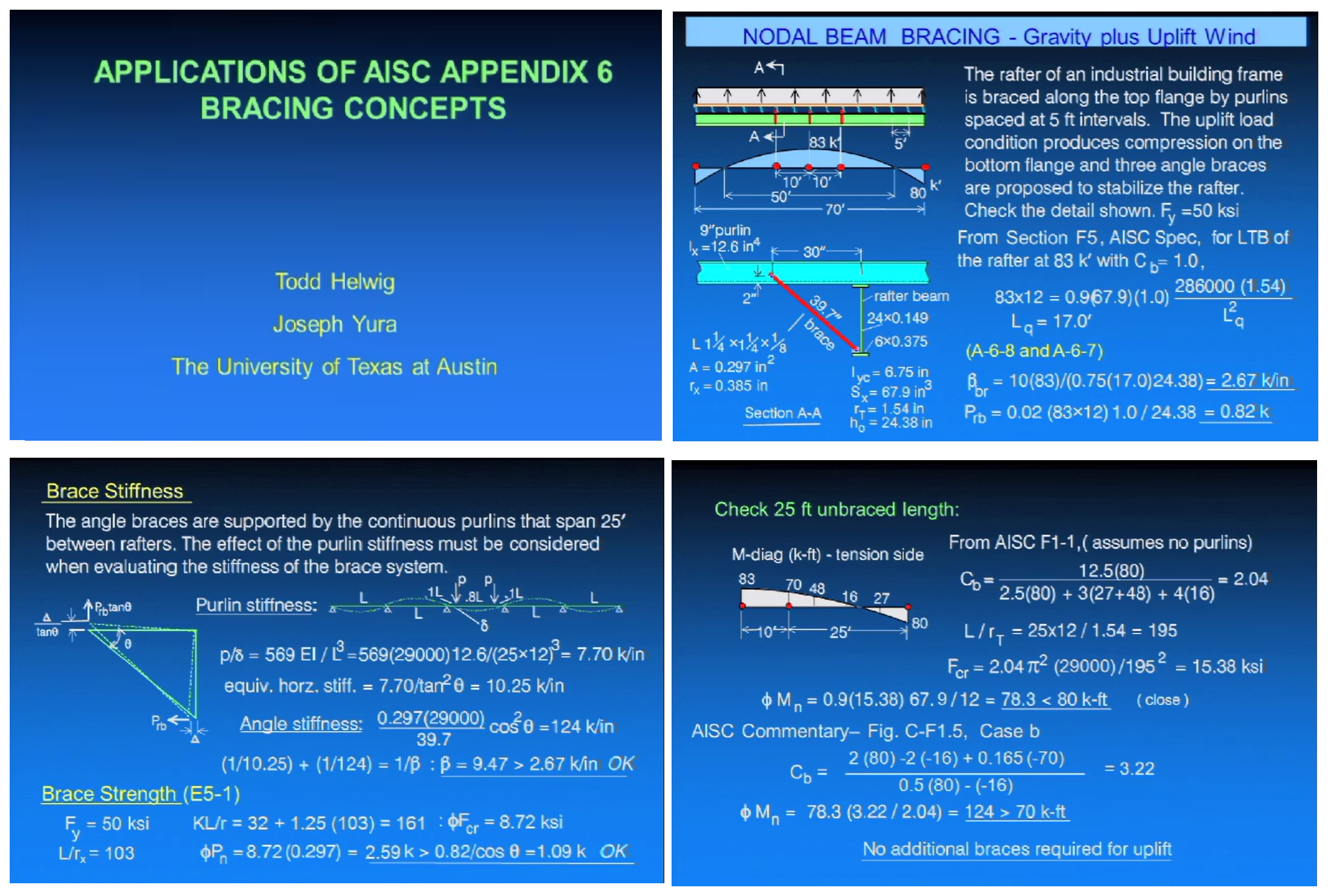
Reference: AISC Learning Portal, https://learning.aisc.org/local/catalog/view/product.php?productid=611 [4]
References:
[1] American Institute of Steel Construction, 2022. Specification for Structural Steel Buildings. American Institute of Steel Construction.
[2] https://steelconstruction.info/Bracing_systems
[3] https://www.cmf.uk.com/download/Purlins-Brochure.pdf
[4] AISC Learning Portal, Applications of AISC Appendix 6 Bracing Concepts [N11A],Todd Helwig; Joseph Yura. https://learning.aisc.org/local/catalog/view/product.php?productid=611