4- C&C Wind Loads for Purlins and Girts
MWFRS (Main Wind Force Resisting System) loads are the pressures used to design the overall structural system that keeps the building standing and stable: primary frames, braced bays, shear walls, diaphragms/collectors, and the load path to the foundation. ASCE 7-22 provides MWFRS procedures mainly in Chapter 27 (Directional Procedure) or Chapter 28 (Envelope Procedure, typically for low-rise buildings).
Components & Cladding loads are for individual elements and their attachments that form the building envelope (roof panels, purlins, girts, wall panels, copings/edge metal, doors/windows, and often purlins/girts and their connections depending on what they support). ASCE 7-22 uses Chapter 30 with zone-based coefficients and effective wind area (EWA) effects.
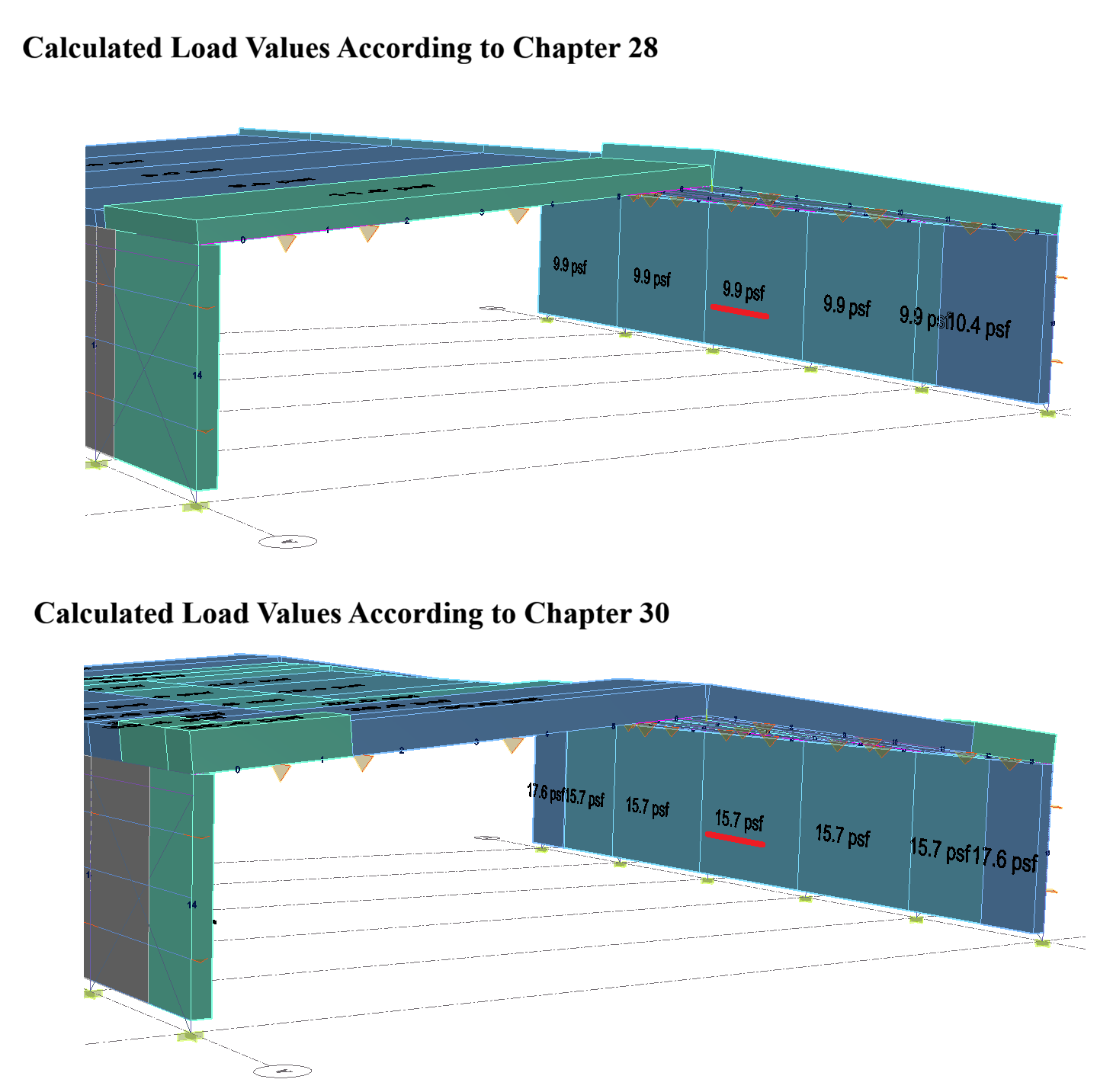
However, structural engineers often calculate wind loads in accordance with Chapter 27 or 28 and use those loads for the design of both the MWFRS (main frames) and the C&C elements (girts or purlins). In reality, this is not appropriate, because small effective wind areas generally attract higher pressure coefficients, as peak gust effects do not average out over limited areas. As a result, the pressure coefficients specified in Chapter 30 for components and cladding are significantly different from, and often more severe than, those given in Chapter 28 for MWFRS design.
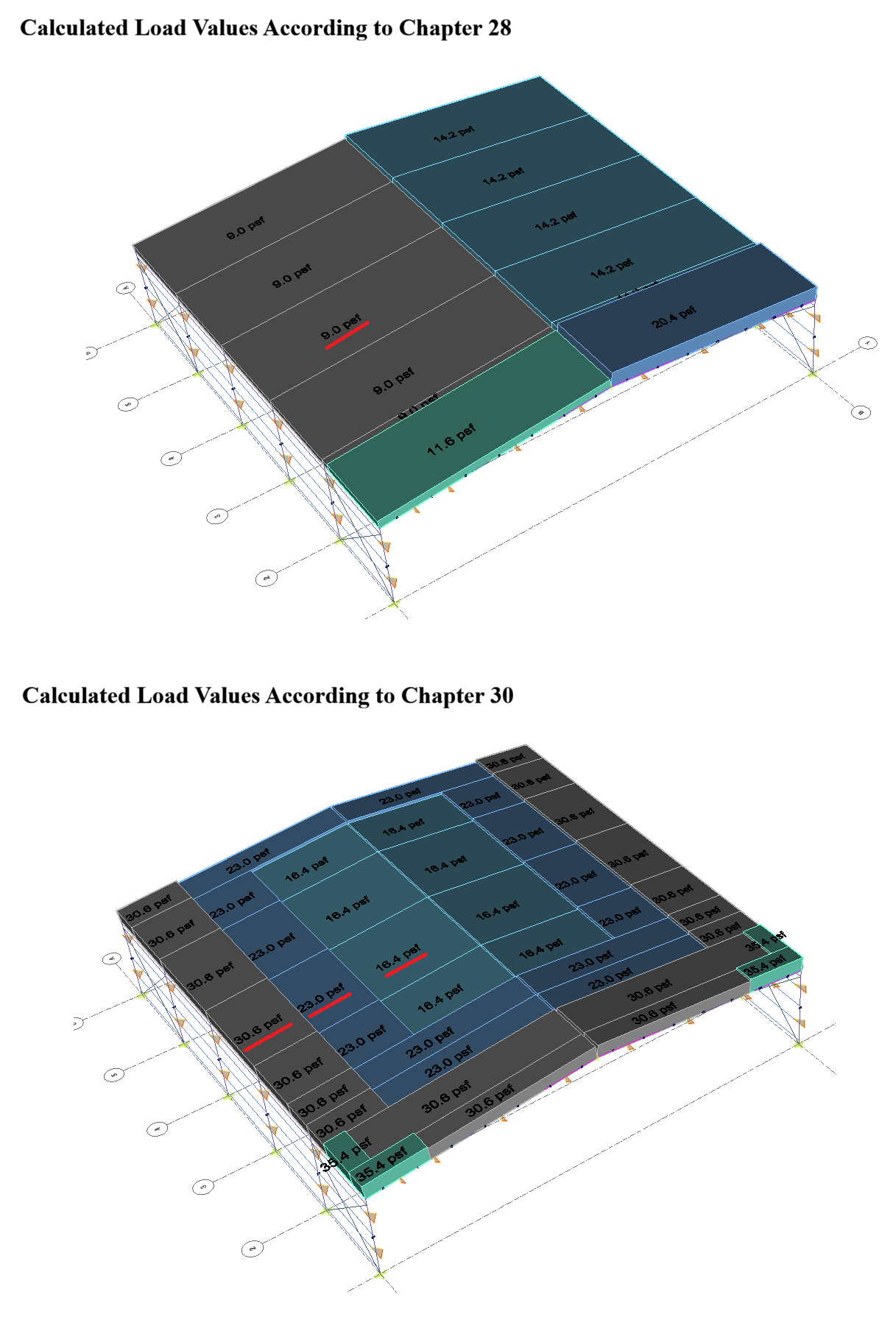
For example, for the purlin shown in the figure below, assuming an effective wind area of 100 ft², the external pressure coefficient should be taken as -1.8 in accordance with Chapter 30, whereas the corresponding external pressure coefficient from Chapter 28 would be only -0.37. Neglecting the Chapter 30 requirements for purlin design can therefore significantly underestimate purlin demand, leading to substantially lighter purlins that are neither safe nor code-compliant.
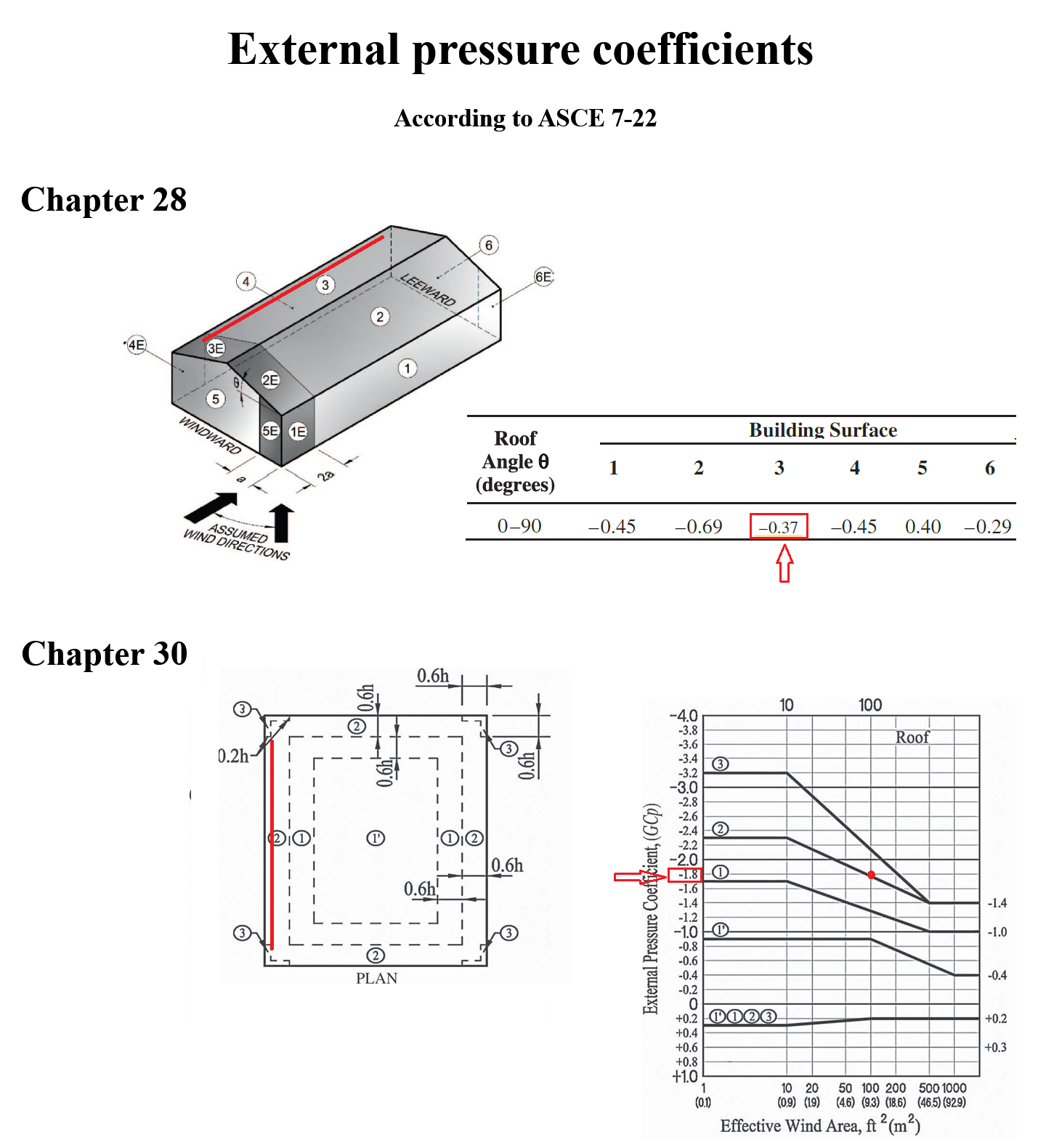
Example for Purlin
Example for Girt
Reference
[1] American Society of Civil Engineers. "Minimum design loads and associated criteria for buildings and other structures." American Society of Civil Engineers, 2022.