5- Surface-Specific Wind Pressure Requirements
ASCE 7-22 provides MWFRS procedures mainly in Chapter 27 (Directional Procedure), Chapter 28 (Envelope Procedure, typically for low-rise buildings) for calculation of wind loads on MWFRS (Main Wind Force Resisting System) and Chapter 30 for calculation of wind loads on C&C (Components & Cladding). Therefore, for low-rise buildings mostly Chapters 28 and 30 are used. These chapters provide external pressure coefficients on different building surfaces according to the roof angle and effective wind area.
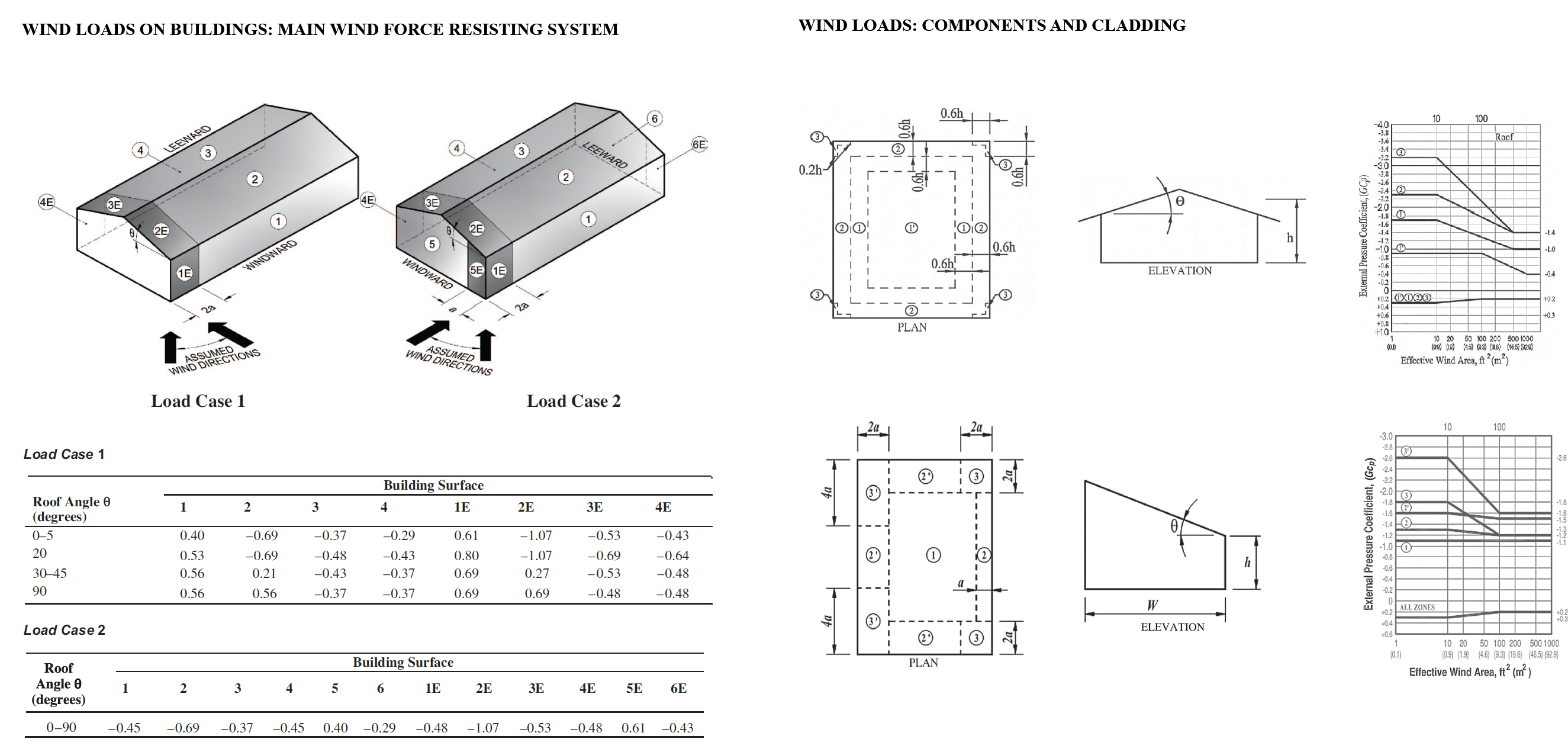
These values are obtained based on wind tunnel experiments and CFD simulations and analysis.
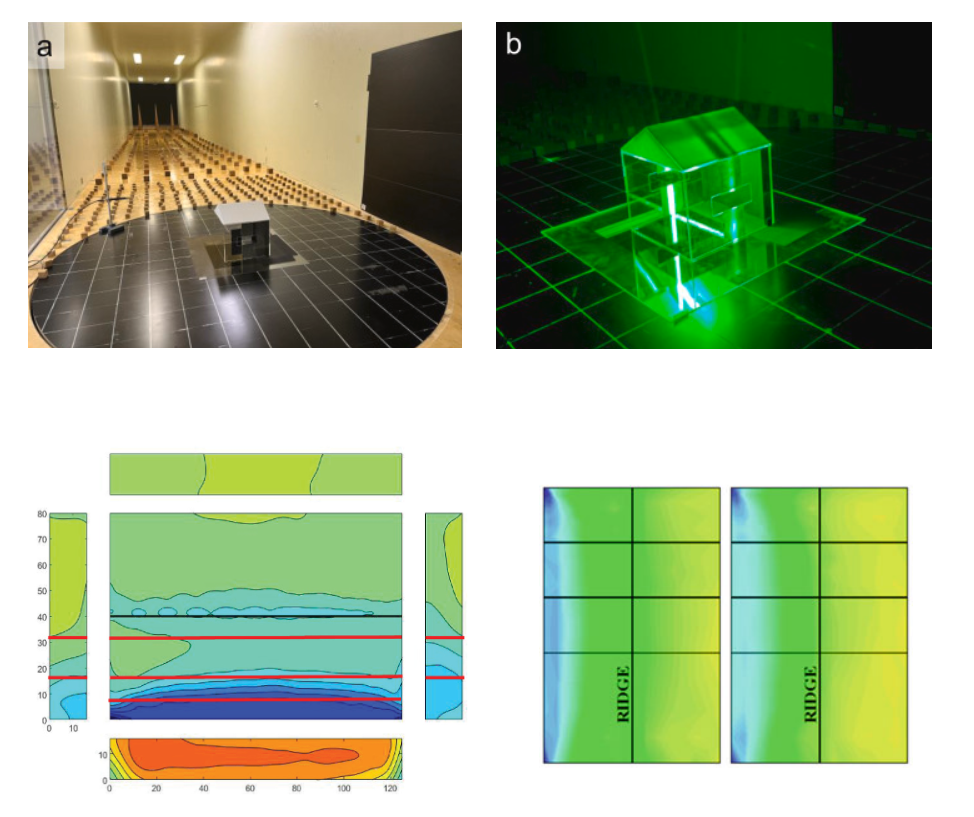
Reference: https://doi.org/10.1007/978-4-431-54337-4_7
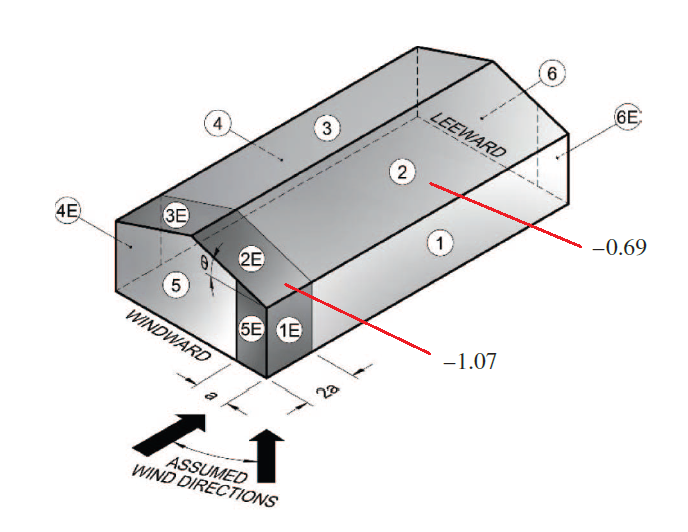
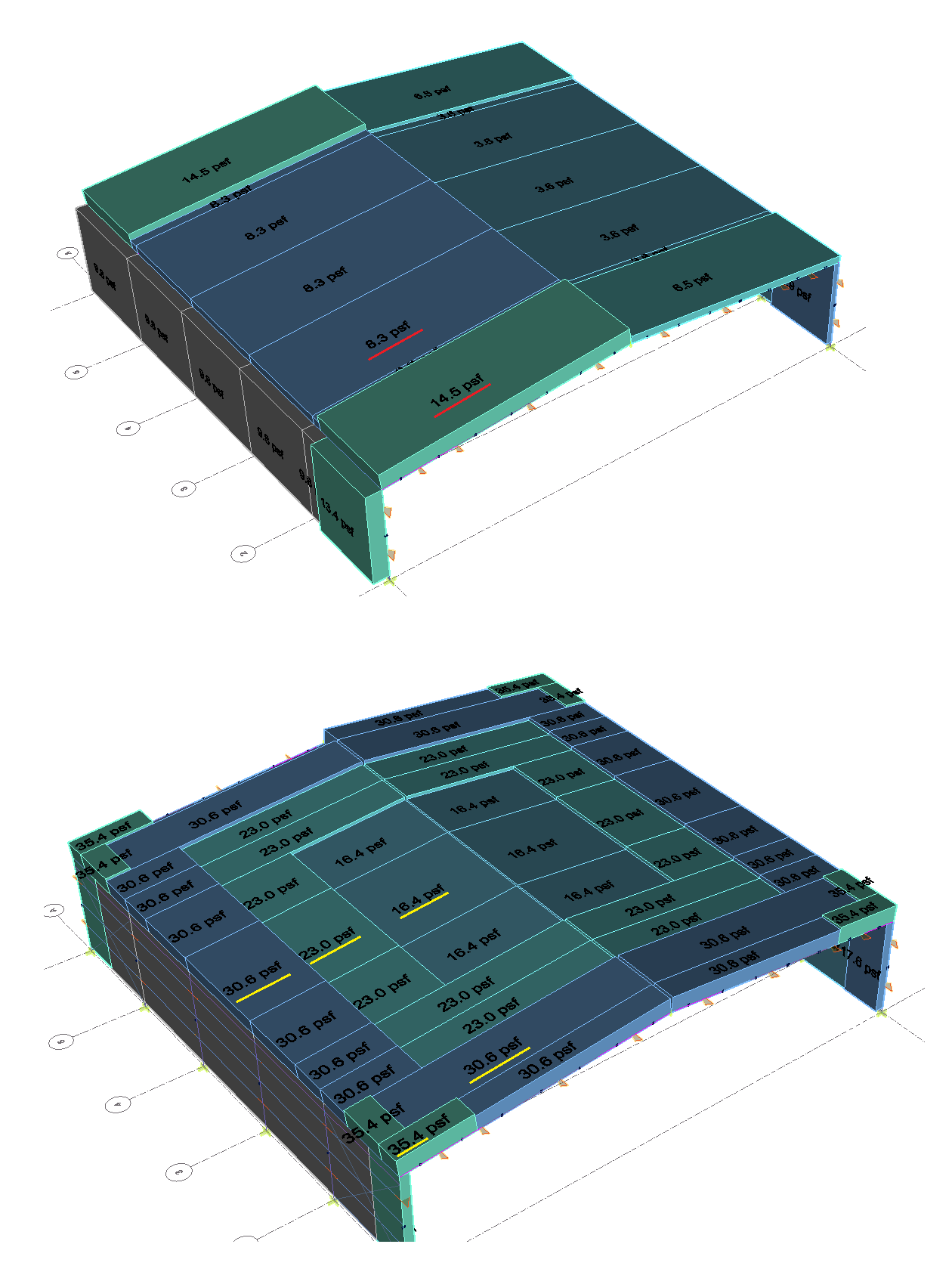
As mentioned the values are different in different parts of the surfaces. For a given example, the two specified region of the buildings have different external pressure coefficients -0.69 and -1.07 (55% more than -0.69) on MWFRS.
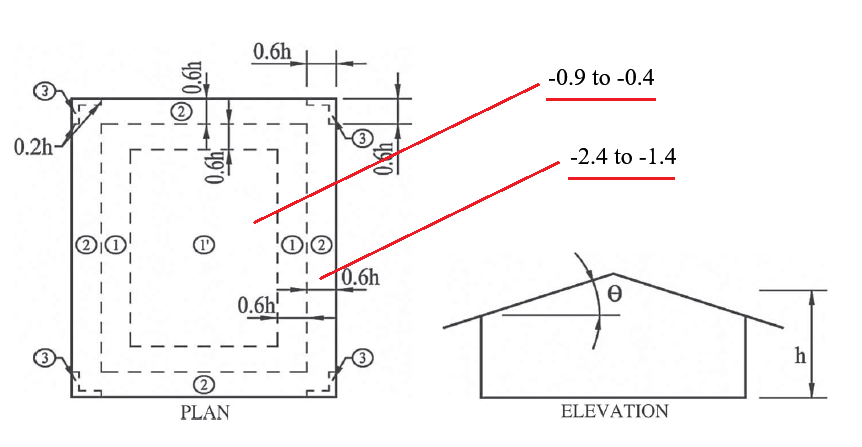
Similarly, for Components and Cladding (C&C) wind loads, different regions of the building surfaces may have different ranges of external pressure coefficients depending on the effective wind area. For example, two specified regions of a building may have coefficient ranges of −0.9 to −0.4 and −2.4 to −1.4, respectively.
Because determining the exact wind pressure on each surface—and then distributing it correctly to each member and purlin in accordance with the figures and pressure coefficients in ASCE 7-22—is time-consuming, structural designers often simplify the process by assigning a single pressure value to an entire surface. For example, in MWFRS design they may apply the Zone 2 coefficient uniformly to both Zones 2 and 2E (i.e., using −0.69 everywhere instead of using −1.07 in Zone 2E), or conversely apply the higher coefficient to the full surface.
While this simplification reduces calculation effort, it can produce unreliable and noncompliant designs. If the lower (minimum) suction/pressure is applied uniformly, members located in higher-demand zones (e.g., edge/corner regions) may be underdesigned, resulting in an unsafe and noncompliant design. Conversely, if the higher (maximum) pressure is applied uniformly, most members are designed for demands they will not experience, leading to unnecessary conservatism and overdesign.
References:
[1] American Society of Civil Engineers. "Minimum design loads and associated criteria for buildings and other structures." American Society of Civil Engineers, 2022.
[2] Kopp, G.A. (2013). Wind Loads on Building Components and Cladding. In: Tamura, Y., Kareem, A. (eds) Advanced Structural Wind Engineering. Springer, Tokyo. https://doi.org/10.1007/978-4-431-54337-4_7