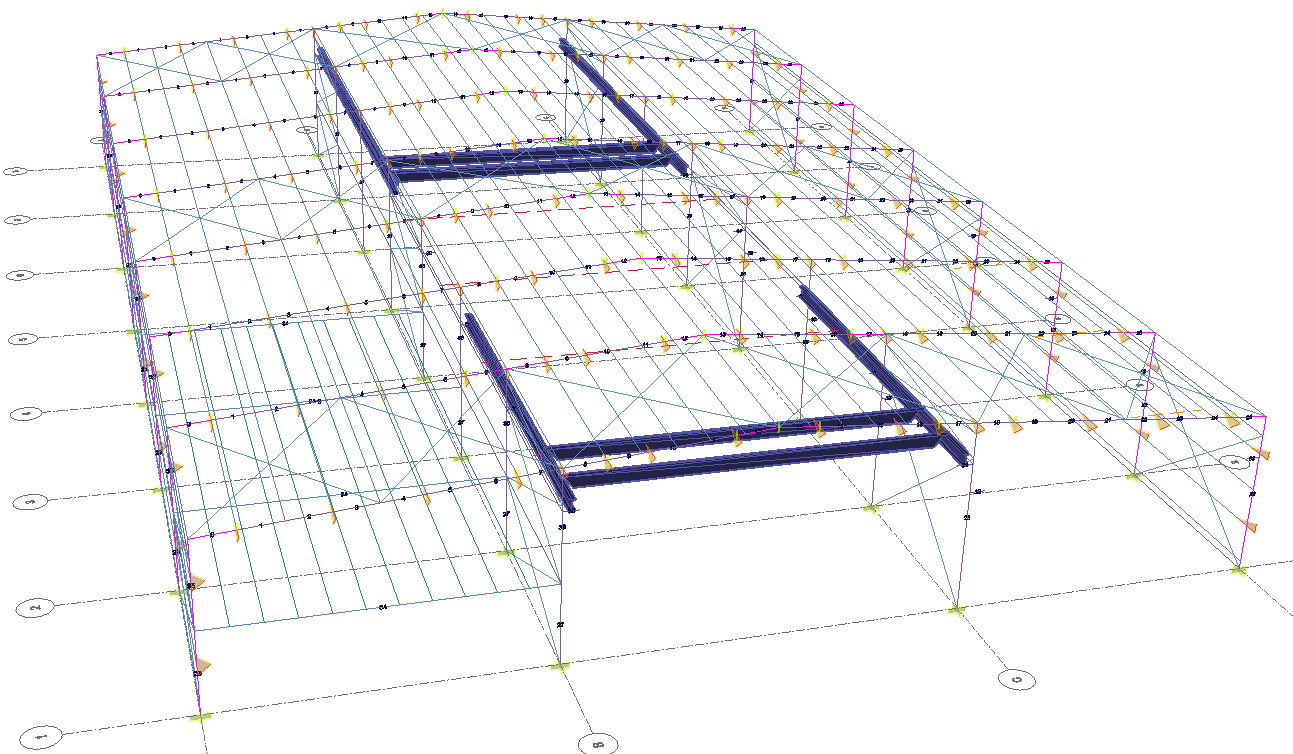
Overhead Cranes
An overhead crane (bridge crane) is a material-handling system in which a bridge travels along runway rails supported by the building, while a trolley/hoist moves along the bridge to lift and transport loads. In single-storey steel industrial buildings and PEMBs, overhead cranes are widely used for production lines, steel fabrication, precast yards, maintenance bays, and logistics—where moving heavy loads efficiently and safely is a core operational requirement. Structurally, an overhead crane is not a “piece of equipment”; it is a load-introducing subsystem that directly engages the runway beams, column brackets, main frames, bracing system, and foundations.
Overhead cranes matter to manufacturers and engineering offices because they strongly influence the functionality and throughput of the facility. A crane-equipped building can reduce handling time, labor, and floor congestion, enabling heavier and larger assemblies and improving workflow reliability. In procurement terms, crane capability often becomes a decisive criterion: it increases the building’s utility, expands the range of operations the facility can support, and can significantly improve the asset’s long-term value and adaptability.
From an engineering perspective, considering cranes in design is critical because they generate unique and demanding actions that differ from typical roof and wall loading. Beyond gravity, crane systems introduce concentrated wheel loads, dynamic/impact effects, horizontal forces from acceleration/braking, lateral forces from skewing, and localized demands at crane brackets and runway connections. These actions can amplify column moments, alter bracing demands, and govern serviceability requirements such as runway deflection, alignment, and vibration performance. If crane effects are underestimated or simplified, projects may face runway misalignment, excessive deflections, connection distress, unanticipated foundation demands, or costly retrofits and downtime after commissioning.
MkaPEB enables you to model and analyze overhead crane systems as an integrated part of the building, not as an external assumption. You can define crane runway geometry and loading parameters and incorporate crane actions within the same analysis/design workflow used for the primary PEMB structure, so member forces, reactions, and stability checks reflect realistic load paths. This makes it straightforward to present convincing screenshots—runway framing and brackets in the model, crane load cases, frame responses, member demand/capacity results, and support reactions—demonstrating to owners and reviewers that crane effects have been explicitly and professionally addressed for a safer, more reliable, and more economical building.