Partial Snow Loads (Just for Purlins)
Snow Load, Partial Loading
For roof purlins in PEMB systems, we often prefer continuous (multi-span) purlin lines—typically Z-purlins lapped over rafters—instead of non-continuous (simple-span) purlins mainly because continuity gives higher efficiency:
- A simple-span purlin has its highest positive bending at midspan. With continuity, part of that bending shifts to negative moment over the rafter lines, so the midspan peak drops, letting you use a smaller Z, increase spacing, or span farther for the same thickness.
- Roof loading is rarely perfectly uniform: drifted snow, maintenance loads, and wind suction zones create uneven demand. Continuity allows redistribution across adjacent spans, reducing “one-span overload” behavior.
- A continuous purlin line reduces abrupt stiffness jumps at every frame, helping maintain a more uniform support line for sheeting/panels and reducing local issues at ends.
- PEMB roofs commonly use Z-purlins with laps at frames to create continuity without fully rigid moment connections—efficient fabrication, repetitive parts, and fast installation.
In the case of continuous purlins, partial snow loading must be considered:
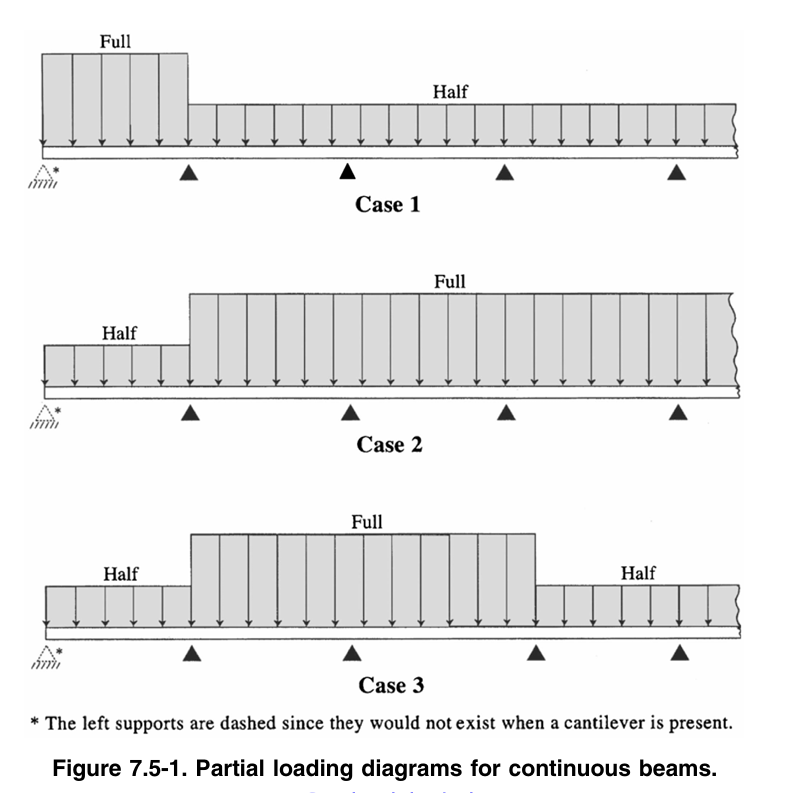
Continuous beam systems shall be investigated for the effects of the following three partial-loading cases, as specified in [1]:
Case 1: Full balanced snow load on either exterior span, and half the balanced snow load on all other spans.
Case 2: Half the balanced snow load on either exterior span, and full balanced snow load on all other spans.
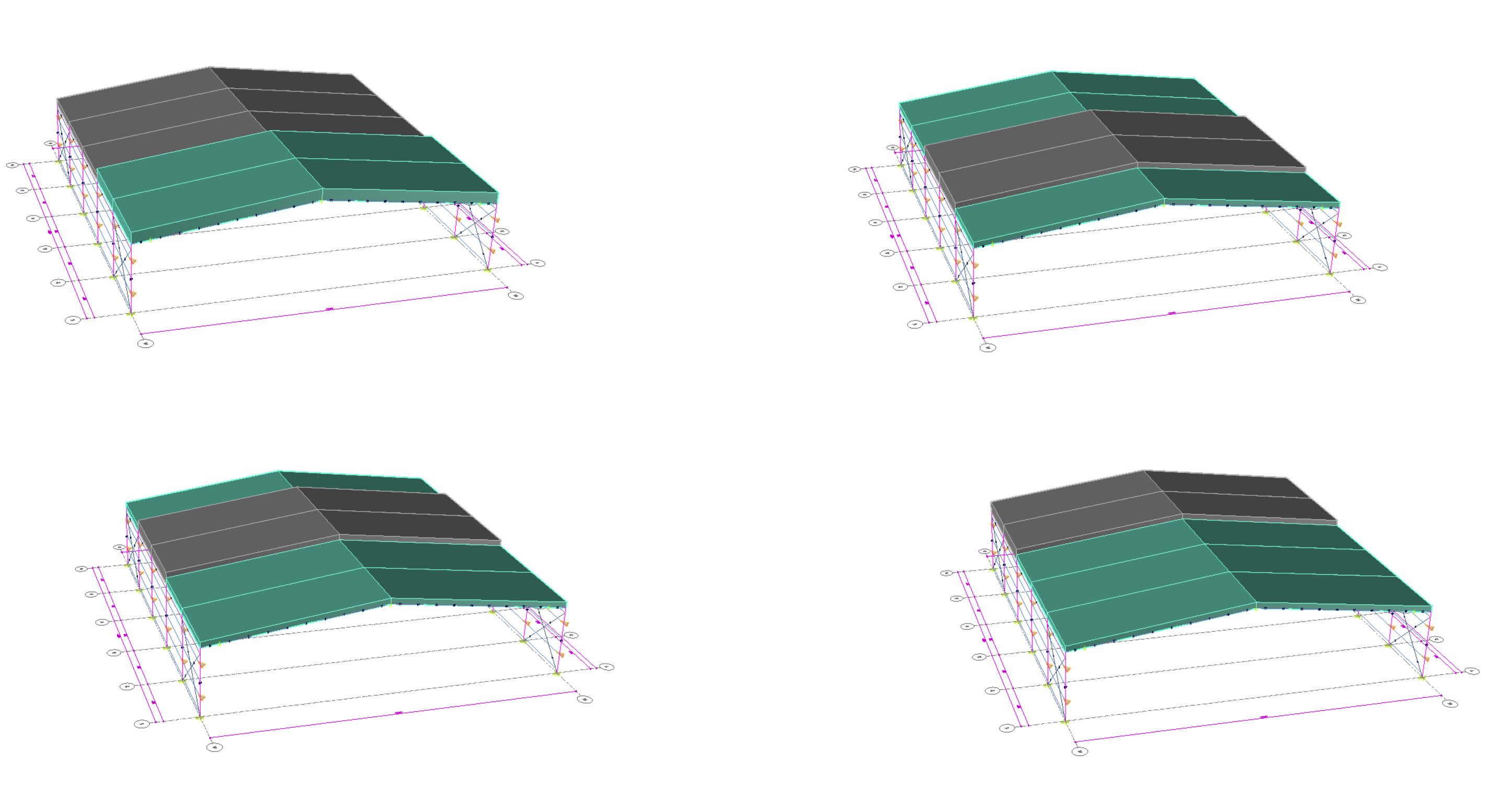
Case 3: All possible combinations with full balanced snow load on any two adjacent spans, and half the balanced snow load on all other spans. For this case, there are (n−1) possible combinations, where n is the number of spans in the continuous beam system.
Accordingly, MkaPEB considers these cases when applying snow loads to continuous beam systems (purlins).
1) Full balanced snow load on either exterior span, and half the balanced snow load on all other spans.
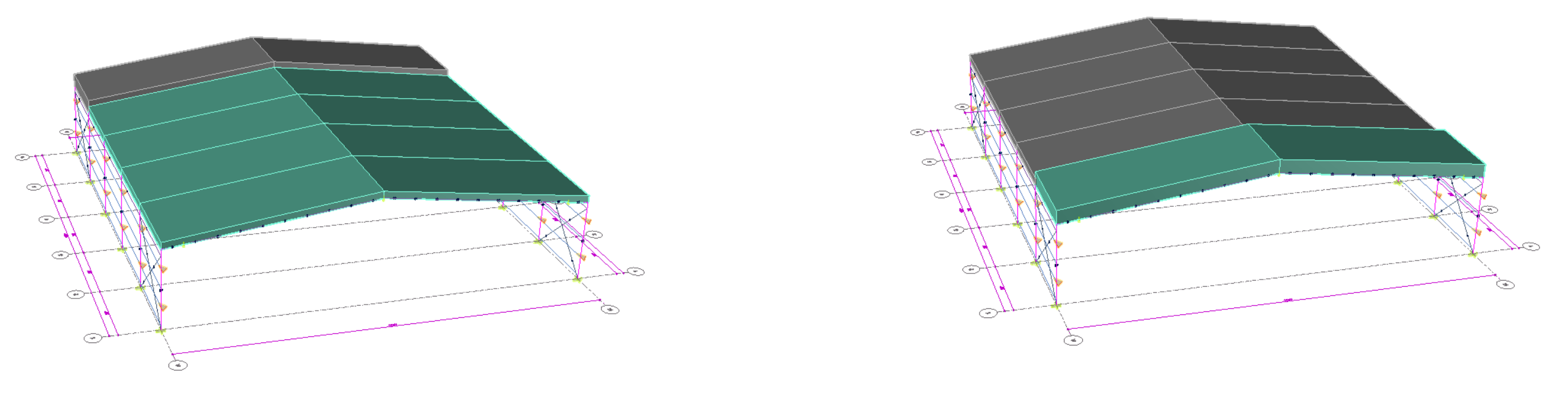
2) Half the balanced snow load on either exterior span, and full balanced snow load on all other spans.
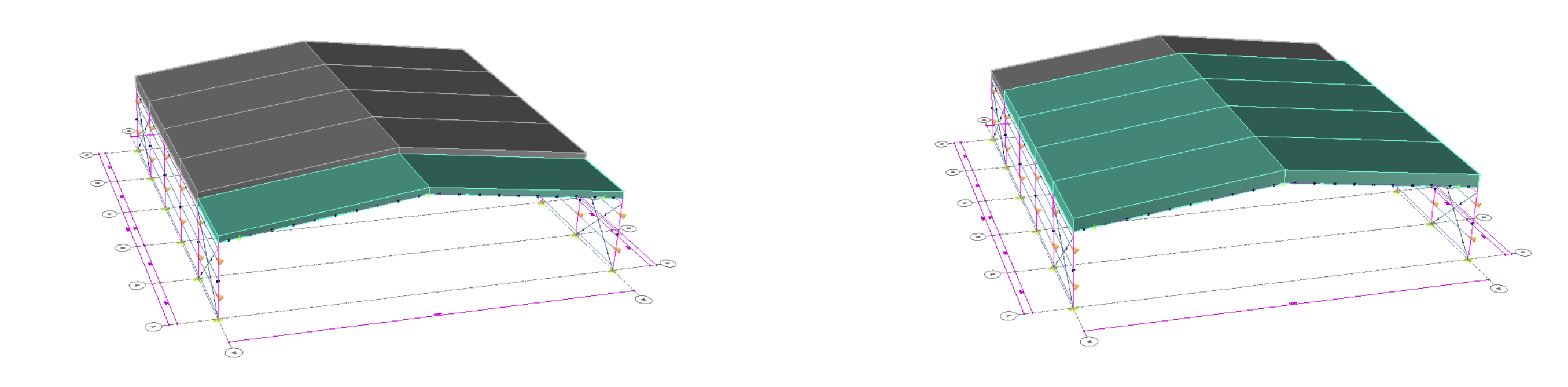
3) All possible combinations with full balanced snow load on any two adjacent spans, and half the balanced snow load on all other spans.
References:
[1] American Society of Civil Engineers. "Minimum design loads and associated criteria for buildings and other structures." American Society of Civil Engineers, 2022.