Snow Loads at Parapets
Snow Loads, Parapets
A parapet is a low perimeter wall (an upstand) that rises above the roof line along the edge of a steel building, creating a clean, continuous roof-edge “frame.” For PEMB manufacturers, it’s an easy way to upgrade the building’s appearance and marketability—parapets hide the roof slope, gutters, and rooftop equipment and give the project a more architectural profile. They also provide a robust, repeatable edge condition for roof membrane termination, copings, and flashings, improving water-tightness at the roof perimeter. In addition, when parapets are used on the front and back elevations, those façades become rectangular, so the wall cladding can be installed as straight, full-height runs—reducing or eliminating rake cuts, minimizing sheet trimming and waste, speeding installation, and delivering a cleaner finish with fewer mismatch risks at the roof-line interface.
In structural design, a parapet is not just an “architectural add-on”; while calculating the snow load at parapet walls should be considered.
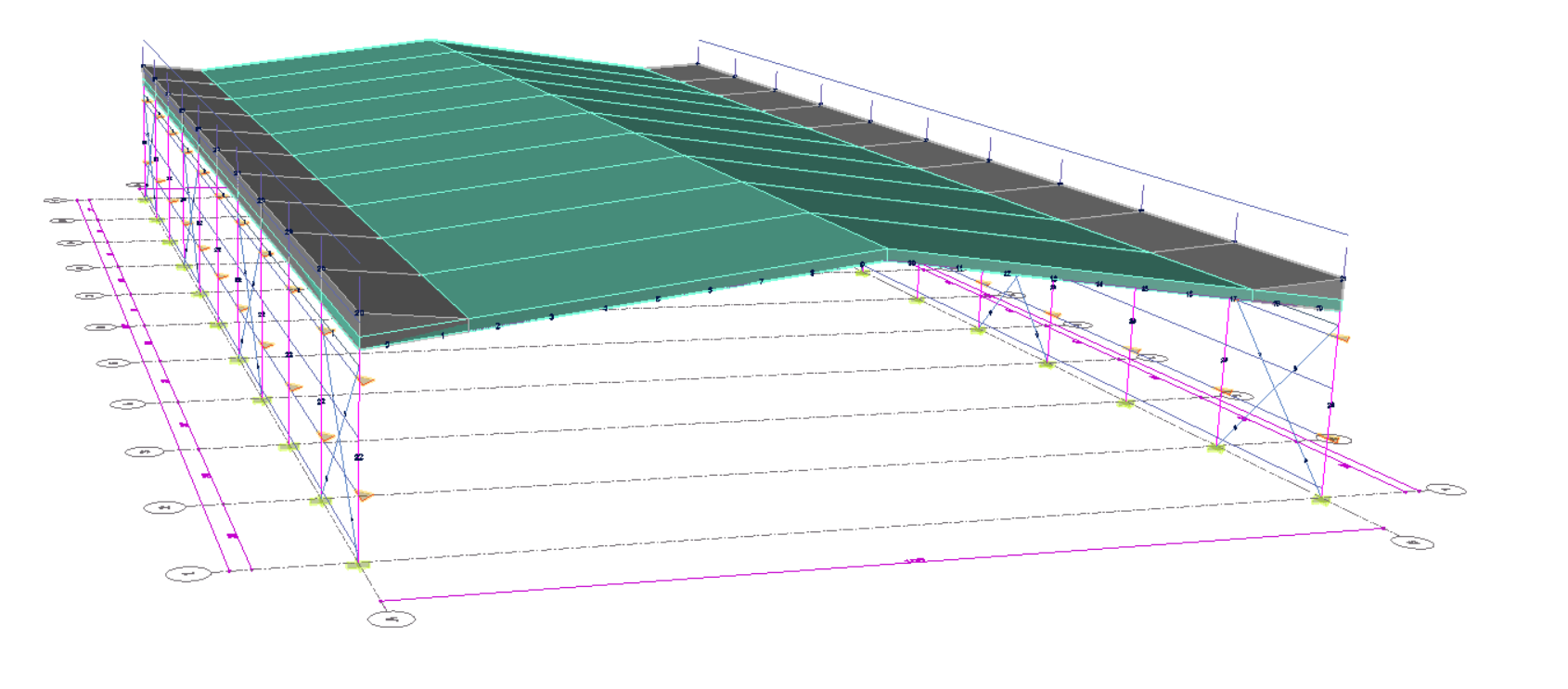
According to ASCE-07-22 [1], the method for windward drifts in Section 7.7.1 from [1] shall be used to calculate drift loads at parapet walls. Accordingly, MkaPEB automatically calculates and applies these drift loads to the relevant parapets.
References:
[1] American Society of Civil Engineers. "Minimum design loads and associated criteria for buildings and other structures." American Society of Civil Engineers, 2022.