Limitations from AISC 341
In MkaPEB, the Seismic Design Category (SDC) is first determined from the seismic maps, and the building is then designed in accordance with the applicable requirements, as summarized below [1].
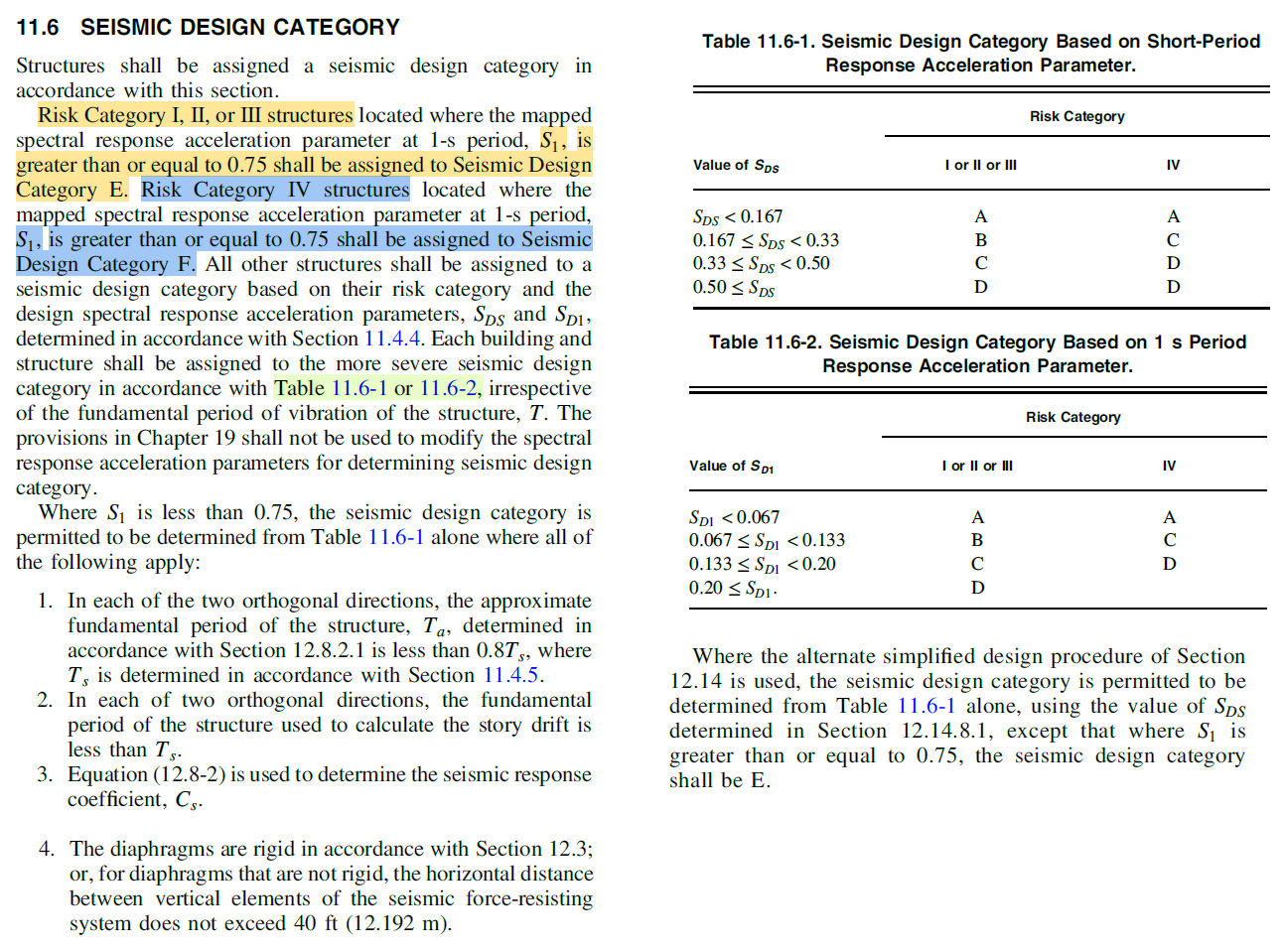
Reference: ASCE 7-22
Seismic Design Category A:
Buildings and other structures assigned to SDC A need not comply with the Seismic Provisions for Structural Steel Buildings.
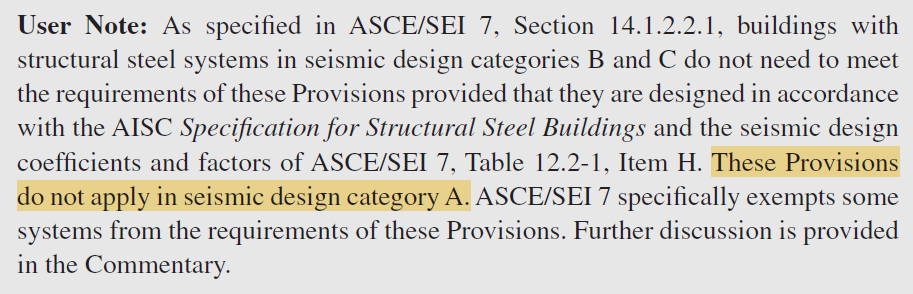
Reference: AISC 341 [2]
Seismic Design Category B and C:
Structural steel structures assigned to Seismic Design Category B or C shall be of any construction permitted by the applicable reference documents (ANSI/AISC 341, ANSI/AISC 360, ANSI/AISI S100, ANSI/AISI S230, ANSI/AISI S240, ANSI/AISI S310, ANSI/AISI S400, ANSI/SDI QA/QC, ANSI/SDI-SD, ANSI/SJI-100, ANSI/SJI-200, ASCE 8, and ASCE 19).
Where a response modification coefficient, R, is used in accordance with Table 12.2-1 of [1] for the design of structural steel structures assigned to Seismic Design Category B or C, the structures shall be designed and detailed in accordance with the requirements of AISC 341.
EXCEPTION: The response modification coefficient, R, designated for “steel systems not specifically detailed for seismic resistance, excluding cantilever column systems” in Table 12.2-1of [1] shall be permitted for systems designed and detailed in accordance with AISC 360 and need not be designed and detailed in accordance with AISC 341.
Accordingly, MkaPEB allows users designing buildings in SDC B or C to select the seismic force-resisting system: Steel systems not specifically detailed for seismic resistance (excluding cantilever column systems).
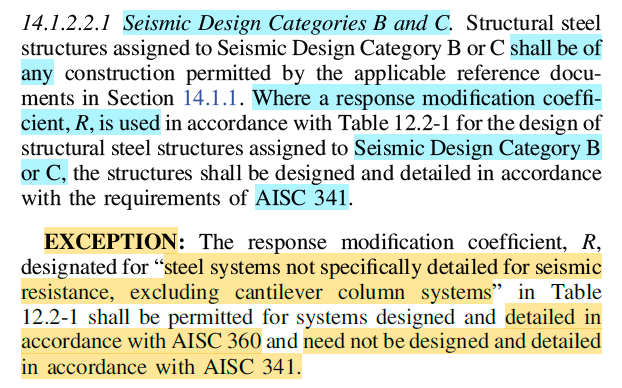
Reference: ASCE-07-22 [1]
Seismic Design Categories D, E and F
Structural steel structures assigned to Seismic Design Category D, E, or F shall be designed and detailed in accordance with AISC 341, except as permitted in Table 15.4-1 of [1].

Reference: ASCE-07-22 [1]
As mentioned above, some structural steel buildings are required to be designed and detailed in accordance with AISC 341 [2].
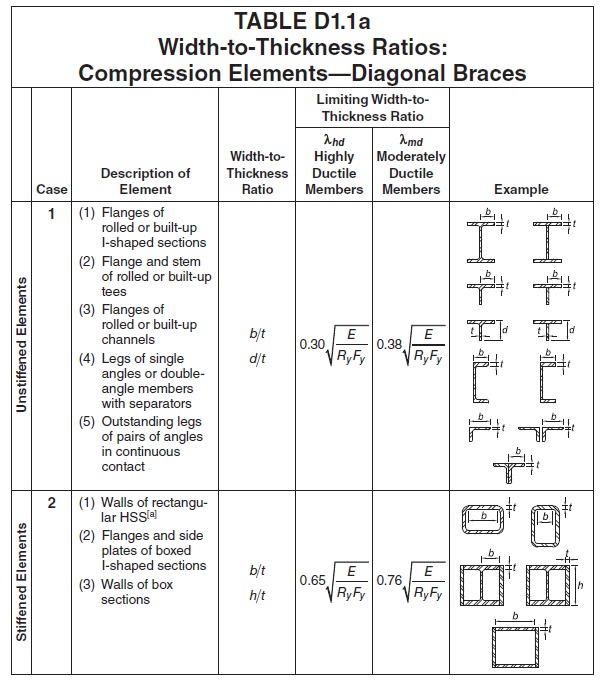
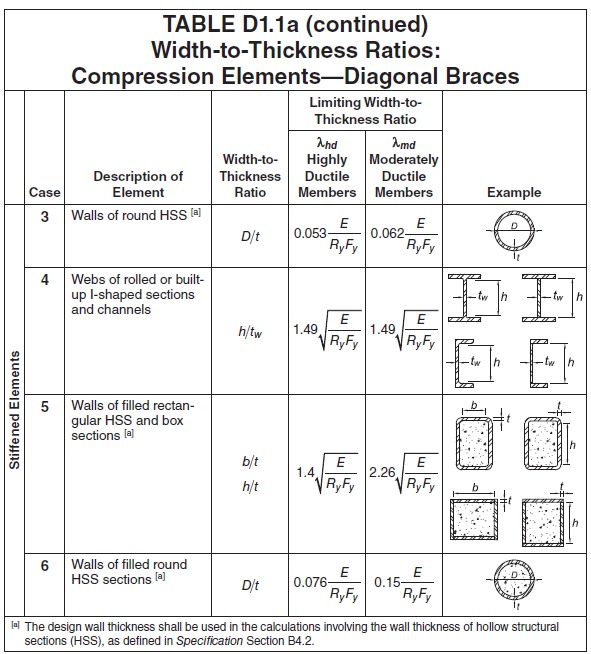
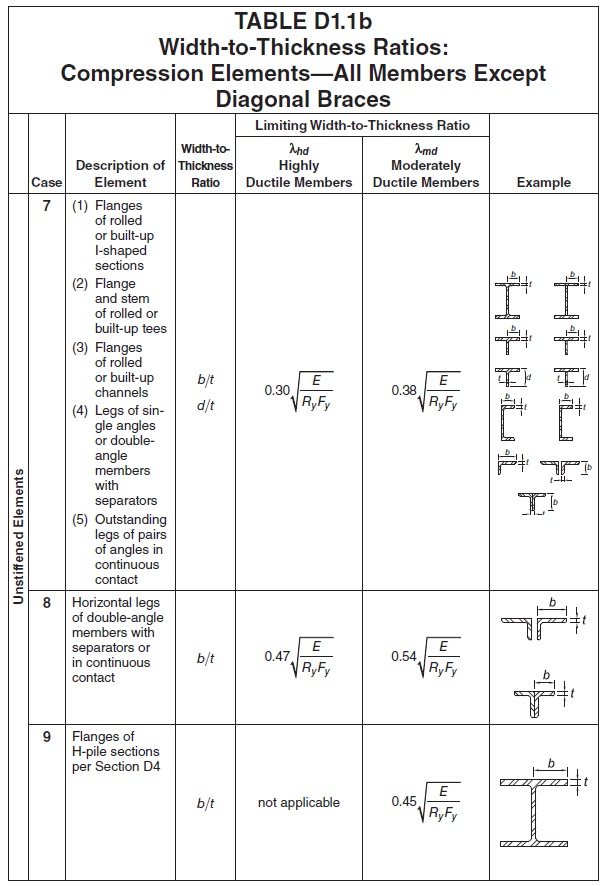
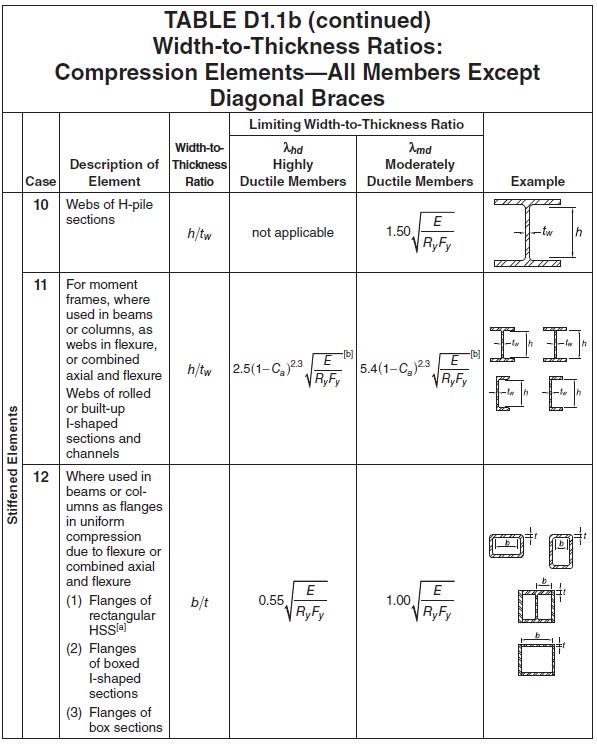
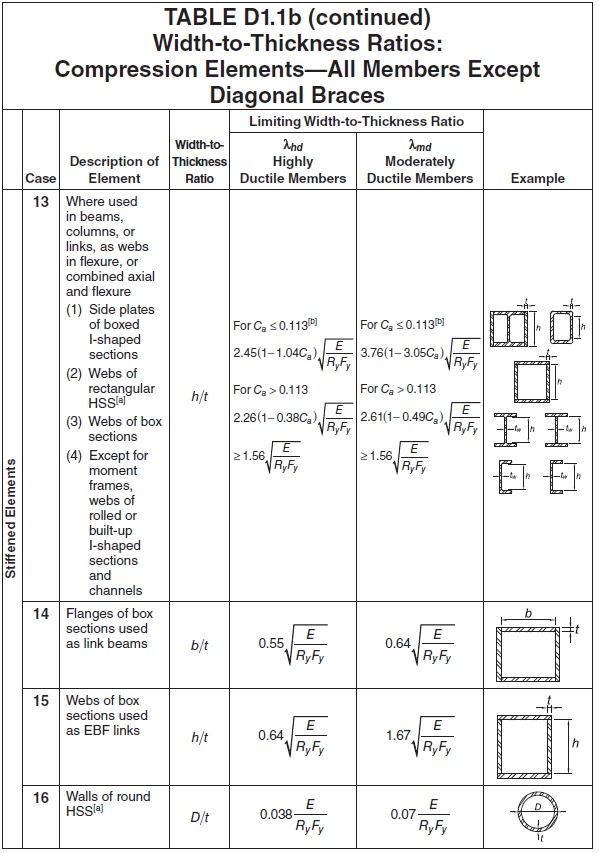
In such cases, the width-to-thickness ratios of compression elements shall not exceed the limiting values λmd or λhd, depending on the member ductility classification (moderately ductile or highly ductile), as specified in Tables D1.1a and D1.1b [2].
Tables D1.1a:
Tables D1.1b:
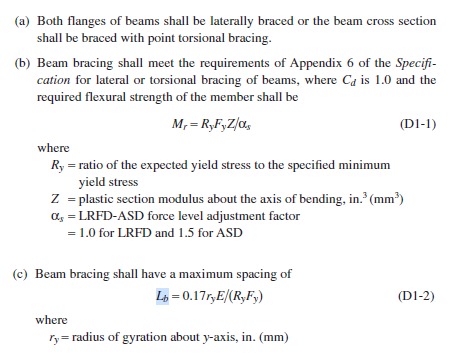
Accordingly, MkaPEB also considers other cross-sectional dimensional limitations related to moderately and highly ductile members, including the following bracing requirements:
According to this specification, the bracing of moderately ductile steel beams shall satisfy the following requirements:
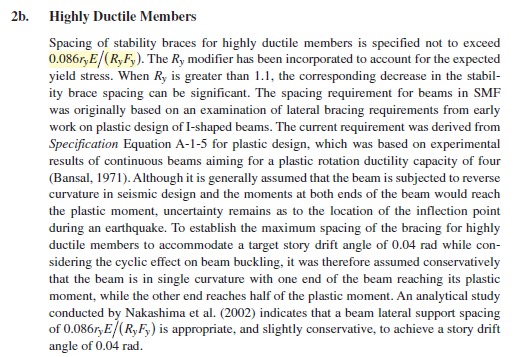
Similarly, the requirements for highly ductile members are as follows:
References:
[1] American Society of Civil Engineers. "Minimum design loads and associated criteria for buildings and other structures." American Society of Civil Engineers, 2022.
[2] American Institute of Steel Construction, 2022. Seismic provisions for structural steel buildings. American Institute of Steel Construction.